Full Texts
Full texts of books and lectures by Adam Smith.
The Theory of Moral Sentiments
The Theory of Moral Sentiments, Smith’s first and in his own mind most important work, outlines his view of proper conduct and the institutions and sentiments that make men virtuous. He develops his doctrine of the impartial spectator, whose hypothetical disinterested judgment we use to distinguish right from wrong in any given situation.
An Inquiry into the Nature and Causes of the Wealth of Nations
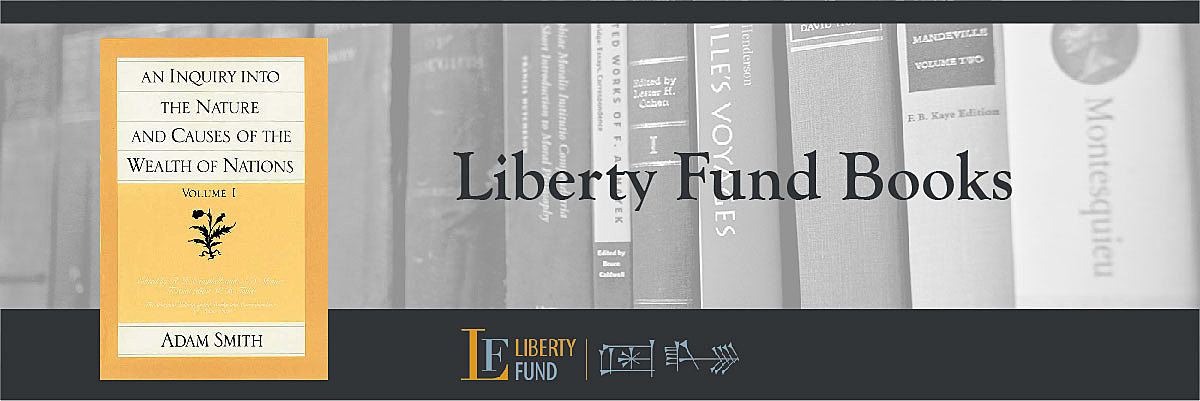
First published in 1776, the year in which the American Revolution officially began, Smith’s Wealth of Nations sparked a revolution of its own. In it Smith analyzes the major elements of political economy, from market pricing and the division of labor to monetary, tax, trade, and other government policies that affect economic behavior. Throughout he offers seminal arguments for free trade, free markets, and limited government.
Lectures on Jurisprudence
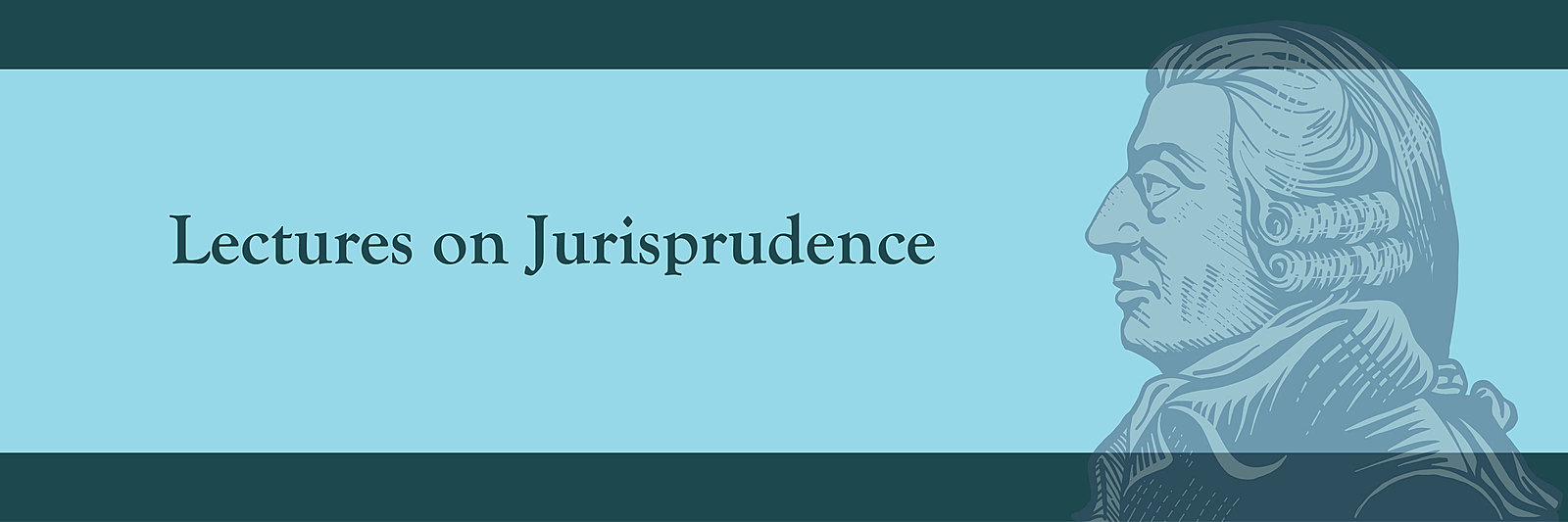
Smith’s Lectures on Jurisprudence, originally delivered at the University of Glasgow in 1762–1763, presents his “theory of the rules by which civil government ought to be directed.” The chief purpose of government, according to Smith, is to preserve justice; and “the object of justice is security from injury.” The state must protect the individual’s right to his person, property, reputation, and social relations.
Essays on Philosophical Subjects
Reflecting Adam Smith’s wide learning and varied interests, these essays shed considerable light on his place in the Scottish Enlightenment. Included are histories of astronomy, ancient logic, and ancient physics; essays on the “imitative” arts and the affinity between music, dancing, and poetry; and a critical review of Samuel Johnson’s famous Dictionary, which Smith originally published in the Edinburgh Review (1755–1756).
Lectures on Rhetoric and Belles Lettres
The “Notes of Dr. Smith’s Rhetorick Lectures,” discovered in 1958 by a University of Aberdeen professor, consists of lecture notes taken by two of Smith’s students at the University of Glasgow in 1762–1763. There are thirty lectures in the collection, all on rhetoric and the different kinds or characteristics of style.